


Watch the full broadcast here: How to Pick your first Angel or Pre-Seed investors
In today’s dynamic tech landscape, securing the right investor can be a game-changer for startups. During a compelling presentation, Martin Tobias, a seasoned pre-seed investor, shared valuable insights into the intricacies of choosing the right investor, particularly in the realm of B2B software. Here’s a comprehensive breakdown of Martin’s insights and advice for founders embarking on their fundraising journey.
Understanding the Current Investment Climate
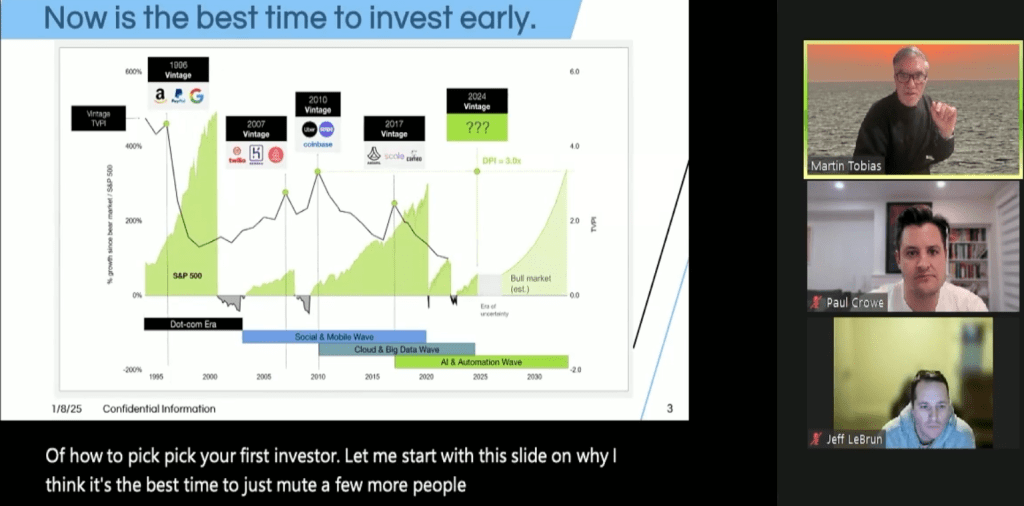
Martin began by contextualizing the present investment landscape, emphasizing that now is an unprecedented time for early-stage B2B software investment. This optimism stems from technological advancements that have drastically reduced the cost of launching a tech startup—from millions in the 1990s to mere thousands today. Additionally, Martin highlighted the transformative potential of AI, likening its current phase to the early days of the cloud revolution. This analogy underscores the long-term growth prospects for AI-driven ventures.
The Nuances of Capital
Investors provide more than just capital. Martin stressed the importance of choosing investors who can offer strategic advantages, such as business development opportunities, introductions to further financing, and operational expertise. Authors of your startup’s growth story should be more than financial backers—they should be partners with valuable industry connections and insights.
Angel vs. Pre-seed: Distinctions That Matter
Understanding the distinctions between angel and pre-seed rounds is crucial. Angel rounds, typically less than $500,000, cater to startups in the initial stages of development. Pre-seed rounds, however, often involve professional investors like Martin and require more concrete achievements, such as having an MVP and initial customer traction. Founders must clearly communicate which stage they are in to attract the right type of investor.
Getting Noticed: Strategies for Founders
For startups to attract attention, they must employ strategies that stand out. Martin encouraged launching on platforms like Product Hunt, winning pitch competitions, and engaging in building public awareness campaigns. Moreover, maintaining an active presence in relevant industry circles can significantly enhance visibility.
Red Flags and Diligence
Early-stage investing can have its pitfalls. Martin warned against unfavorable terms like advisor options, excessive warrants, or side letters with restrictive clauses. He urged founders to be vigilant in their investor choices, emphasizing the importance of references and thorough due diligence on potential investors.
Real-World Case Studies
Martin shared case studies of successful startups he invested in, highlighting how they strategically chose their investor syndicates based on their specific industry needs. One chose investors with deep industry connections for business development, while another prioritized U.S. investors to facilitate future fundraising rounds abroad.
Final Thoughts
Martin concluded by inviting questions from the audience, which delved into differing industry dynamics, such as the consumer and music tech sectors. He shared insights on recognizing potential in varied markets and underscored the value of aligning with investors who resonate with the startup’s mission and vision. In essence, choosing the right investor goes beyond securing funds. It involves finding a partner who believes in your vision, can bring strategic value, and is genuinely interested in your long-term success. For founders, this means navigating the waters of venture capital with a clear strategy, a robust network, and informed judgment.